
The ministry of petroleum and natural gas has granted seven authorisations to companies for selling automobile (auto) fuels in the country. These new approvals are under the relaxed guidelines for authorisation to market transportation fuels that were revised in 2019. This is expected to make the competition more intense in India's petroleum retail business. According to a top oil ministry official, a fresh marketing authorisation has been granted to Reliance Industries (RIL) under these norms. This is being done since RIL's existing retail marketing authorisation has been transferred to its subsidiary Reliance BP Mobility

The change in leadership at the railway ministry comes at a time when the national transporter is grappling with low passenger earnings even as it is trying to increase freight loading and open up its doors to private investment. Union Minister Ashwini Vaishnaw took charge from Piyush Goyal who got the railway portfolio in 2017 after Prime Minister Narendra Modii dropped Suresh Prabhu from the Union Cabinet. Completing freight corridors, negotiating land for the bullet train, and speeding up monetisation plans would be some of the major focus areas for Vaishnaw.

India's dependence on imported crude oil to meet domestic demand has been a matter of concern for years. Delivering the inaugural address at the global energy summit - Urja Sangam - in 2015, Prime Minister Narendra Modi had called for enhancing domestic oil and gas production to cut the import burden. He aimed at lowering it by at least 10 per cent by 2022 - to coincide with the platinum jubilee of India's independence. But this target is far from being achieved and the country's import reliance has only risen.

The Indian Railway Station Development Corporation is now looking to modernise 90 stations across the country.

India may soon see a new set of oil barons with lesser-known companies venturing into crude oil and natural gas production. These new kids on the block have come up through a mix of entrepreneurial grit and backing from oil industry veterans. Nippon Power, South Asia Consultancy, PFH (Poddar Family Holdings) Resources and Chennai-based Adbhoot Estates could be the first ones to start production from blocks awarded during the first round of Discovered Small Field (DSF-1) auctions. Adbhoot is in a 50:50 joint venture with the Bombay Stock Exchange-listed Hindustan Oil Exploration Company that has some five oil producing assets and over 10 blocks across the country.

According to government data, the Centre procured only 35,179 ventilators out of the 50,000 originally ordered.

With the price of a cylinder touching Rs 800, it's becoming increasingly unaffordable to an already price-sensitive population, threatening to risk one of the most-celebrated campaigns of the Modi regime, reports Twesh Mishra.

Government-controlled oil-marketing companies (OMCs) have held back petrol and diesel price revisions for a week and are expected to continue doing so, ostensibly owing to political reasons. It appears that the Centre has informally conveyed to the three major OMCs to not revise fuel prices for the time being, two people in the government said. This informal directive follows the talks between the Centre and states on cutting taxes and bringing the auto fuels under the good service tax regime not fetching the desired results, so far.
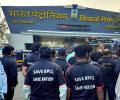
With the privatisation of BPCL appearing inevitable, there are worries that the new promoter would soon move to lower wages.
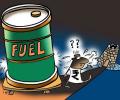
A swift recovery in oil demand in India is not only helping the stability of the global market, it is giving huge fiscal headroom to the government in terms of additional excise duty.

'The CEA suggested that could be as high as 19 per cent.'

A lot of work is needed to be done on the part of the insurance sector behemoth, and the government, before it is ready for its market debut.

Almost all infrastructure ministries continued spending on capex throughout the lockdown, even as the Centre tried to maintain some semblance of economic normalcy.

The sudden stop in economic activity led to a sharp decline in employment-intensive sectors like construction, manufacturing and trade, hotels, transport etc.

Instead, 2019-20 could be the base from which the Budget estimates for next year are calculated.

he government is examining a plan of bank recapitalisation and considering an urban version of MNREGS.

The plan could mature into either an umbrella programme for urban youths similar to the Garib Kalyan Rozgaar Abhiyaan or a modified urban-focused version of MGNREGS.
The thinking at the Centre is that since the RBI has ramped up purchases of government bonds, the interest earned on them will be transferred to the exchequer as dividend.

'We are not able to manufacture even low-end products as cheaply as China.' 'We are not buying Chinese goods today out of any love for China.'

The trade deal, officials say, can lead to an effective trading bloc against the China-led Regional Comprehensive Economic Partnership.
 © 2025 Rediff.com - Investor Information - Advertise with us - Disclaimer - Privacy Policy - Sitemap - Feedback - About us - Terms of use - Grievances